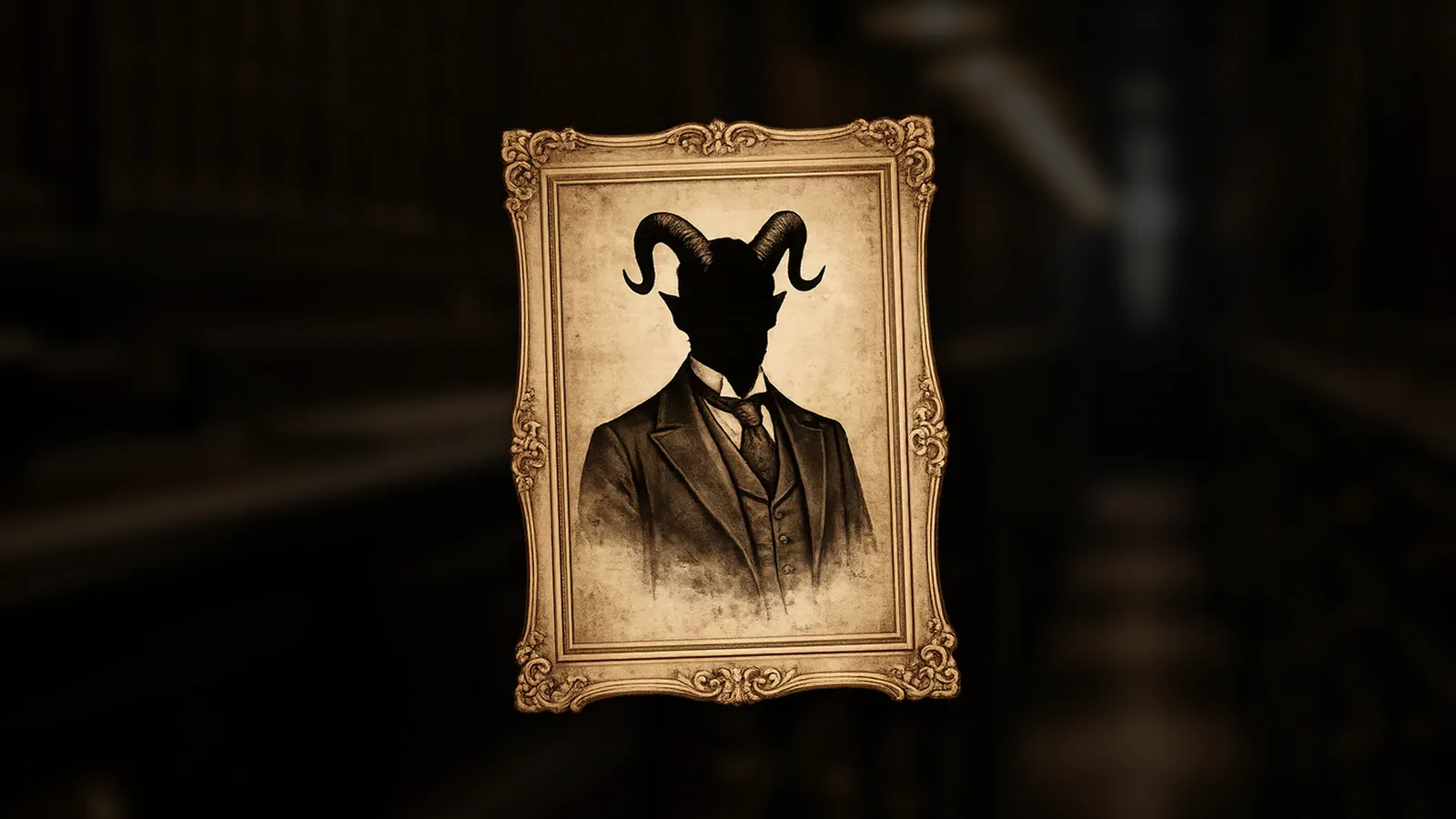
People have been selling their souls in stories for well over a thousand years, and the paperwork has rarely gone well. Below are nine of the best-known cases, from medieval legend to a 1979 country hit. Each is followed by a short assessment from the Records Office, which has seen every one of these contracts and considers most of them poorly drafted.
1. Theophilus of Adana (6th century)
The oldest famous case in Christian Europe. According to the legend, Theophilus was a church official in Asia Minor who lost his position and, through a go-between, signed a written pact with the devil to get it back. He got it back. He then repented, prayed to the Virgin Mary, and in most versions she retrieved the contract from hell and returned it to him. The story was retold throughout the Middle Ages in sermons, plays and stained glass.
Bureau assessment: The first recorded case of a signatory asking for the contract back. It set a regrettable precedent.
2. Doctor Faustus (1587, 1592, 1808)
There was a real Johann Georg Faust, a traveling astrologer and alchemist in early 16th-century Germany with a poor reputation. After his death, a German chapbook of 1587 turned him into the scholar who sold his soul for knowledge and pleasure. Christopher Marlowe adapted it into Doctor Faustus around 1592: Faustus signs in his own blood for 24 years of service from the demon Mephistopheles, and famously finds his blood congealing as he writes. Goethe returned to the story two centuries later, with Faust, Part One in 1808 and Part Two in 1832.
This is why a bad trade of long-term principles for a short-term reward is still called a Faustian bargain.
Bureau assessment: Twenty-four years is a generous term. The blood clotting mid-signature was a clear warning, and it was ignored.
3. Urbain Grandier (1634)
In the French town of Loudun, a group of Ursuline nuns were said to be possessed, and they accused the parish priest, Urbain Grandier. At his trial, prosecutors produced a written pact supposedly signed by Grandier and countersigned by several demons, including Satan, Beelzebub, Lucifer, Leviathan and Astaroth. It is written in Latin, backwards. Grandier was convicted and burned alive in 1634. Historians generally regard the affair as a political prosecution, and the document as evidence of nothing except what his enemies wanted.
Bureau assessment: The only case in which the demons' countersignatures were produced by the other side. The Bureau does not recognize the filing.
4. Giuseppe Tartini and the Devil's Trill (18th century)
The Italian violinist Tartini told the French astronomer Jérôme Lalande that he had dreamed of selling his soul to the devil. In the dream, the devil took his violin and played a sonata more beautiful than anything Tartini had heard. On waking, Tartini tried to write it down. The result became known as the Devil's Trill Sonata, and Tartini said it fell far short of what he had heard.
Bureau assessment: A dream is not a binding instrument. The consideration was never delivered in full, and the sonata is still widely performed.
5. Niccolò Paganini (1782–1840)
Paganini played the violin so fast and so strangely that rumors of a pact followed him across Europe. His gaunt appearance and dark clothes did not help. When he died in 1840, church authorities refused him a Christian burial, and his remains waited decades before reaching their final resting place in Parma.
Bureau assessment: No contract was ever filed. Some people are simply good at the violin.
6. Robert Johnson and the crossroads (1930s)
The Mississippi bluesman Robert Johnson recorded only 29 songs, including "Cross Road Blues" in 1936, and died in 1938 at the age of 27. A legend grew that he had met the devil at a crossroads at midnight and traded his soul for his guitar playing. Similar stories were told about other bluesmen, notably Tommy Johnson, and the crossroads bargain is much older than the blues. But Robert Johnson's name is the one that stuck.
Bureau assessment: Crossroads deals were verbal, unwitnessed and made in the dark. The Bureau stopped accepting them some time ago. See clause 3 of the Devil's Covenant: "This Contract supersedes all prior soul-related agreements, including crossroads deals."
7. The Devil and Daniel Webster (1936)
In Stephen Vincent Benét's short story, a New Hampshire farmer named Jabez Stone sells his soul for seven years of good luck. When the devil comes to collect, the statesman Daniel Webster argues the case before a jury of the damned, assembled from the worst figures of American history, and wins.
Bureau assessment: The only instance of a soul contract being defeated on appeal. Legal has asked that the story not be discussed in front of new hires.
8. Damn Yankees (1955)
The Broadway musical, based on Douglass Wallop's novel The Year the Yankees Lost the Pennant, has a middle-aged fan of the hapless Washington Senators sell his soul to become a young star and beat the Yankees. The devil, Mr. Applegate, sends a temptress named Lola to keep him from using the escape clause he negotiated.
Bureau assessment: A petitioner who negotiates an escape clause is a petitioner who has read the contract. The Bureau respects this and dislikes it.
9. The Devil Went Down to Georgia (1979)
The Charlie Daniels Band song has the devil challenge a young fiddler named Johnny to a contest: a golden fiddle if Johnny wins, his soul if he loses. The devil plays first, with a band of demons. Johnny plays second, and wins.
Bureau assessment: A wager, not a sale. Performance-based contracts expose the acquiring party to risk, and the Bureau no longer offers them.
What the famous cases have in common
Almost every one of these stories turns on the paperwork: a pact signed in blood, a contract retrieved from hell, an escape clause, a document produced in court. The terms matter, and so does who holds the copy.
That, per our records, is why the Bureau has kept the files since 4000 BC. If you intend to sell a soul, yours or someone else's with their consent, the Devil's Covenant is the standard instrument: eight clauses, a curse of breach, and a sealed filing number. Drafting it is filed at no cost.